Hinges · gearboxes · assembly
The shoulder is formed by the die, not turned on a lathe. That single change removes a secondary operation and keeps the diameter identical across batches.
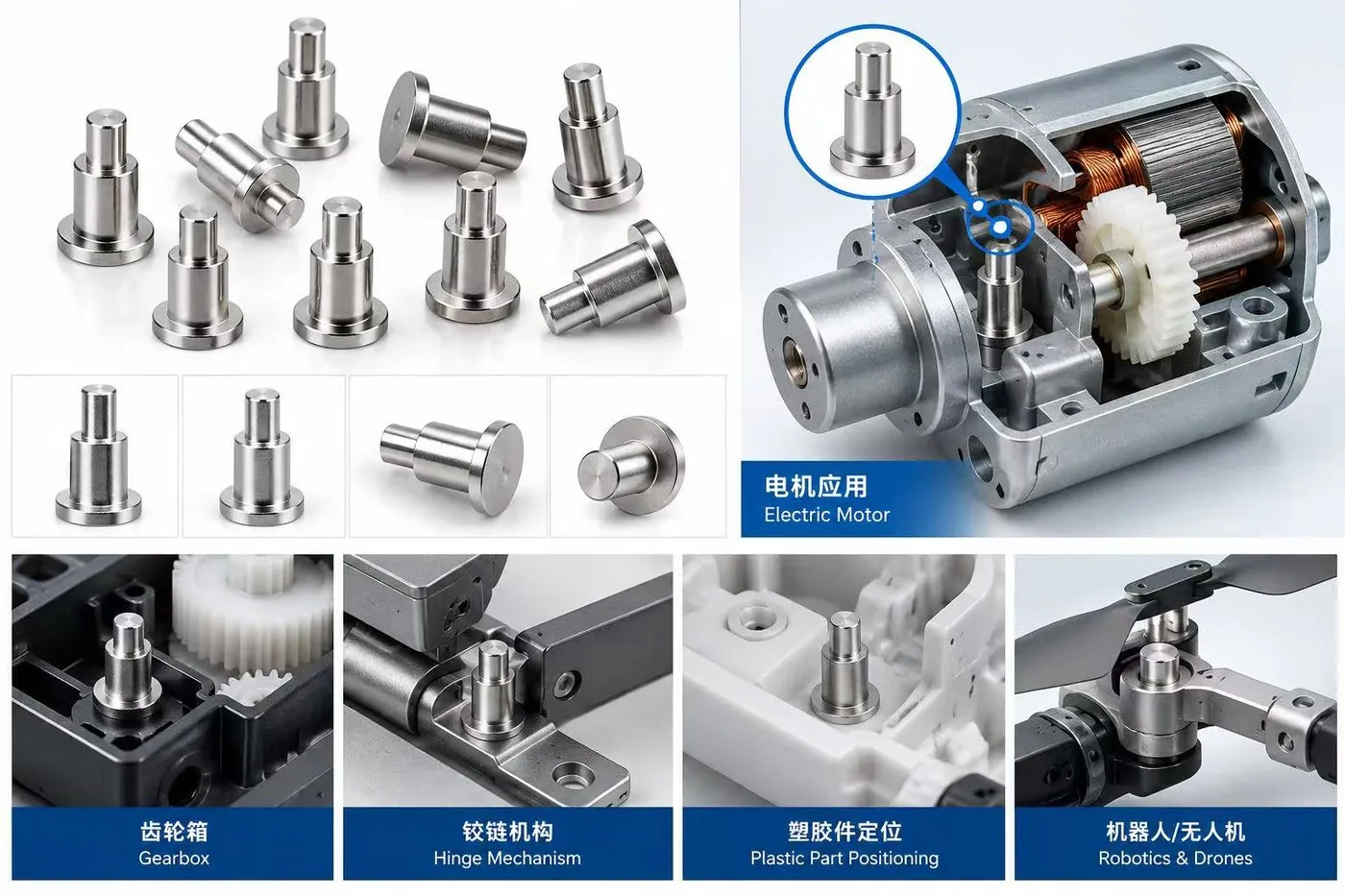
The part
A step pin locates two parts at different diameters. When the shoulder is turned, the diameter drifts with tool wear; when it is headed, it is the die that decides — and the die does not wear the same way.
Specification
These are the ranges we produce most often. If your drawing sits outside them, send it anyway — the answer will be honest, including when the answer is no.
| Material | Carbon steel · stainless steel |
| Shank diameter | 2 – 10 mm |
| Overall length | 5 – 60 mm |
| Shoulder tolerance | ±0.02 mm typical |
| Finish | Zinc, nickel or passivation |
| Process | Multi-station cold heading, optional thread rolling |
Values shown are typical for this part family, not a catalogue limit. Final specification is agreed against your drawing.
Why it is difficult
A part that looks correct can still fail in the field. These are the failure modes the process is designed around.
| Shoulder run-out | A step that is not concentric loads the hinge unevenly and wears the bore. |
| Head or step cracking | Cold heading must respect the reduction ratio; we review that before tooling. |
| Length drift | Accumulated tolerance across three stations, controlled at the last one. |
Inspection
2D projector, first article and patrol.
Between shank and shoulder, per lot.
Vickers on heat-treated batches.
Salt spray to the hours your spec calls for.
Where it goes
Pins that locate gears and absorb torque reaction.
Wear-resistant steps that see millions of cycles.
Pins pressed into moulded housings without cracking them.
Lightweight structural pins with tight concentricity.
Feasibility, process route and an indicative price in 48 hours — including when the answer is that turning is the better route.
Send a drawing