Atomisers · sensors · electronic devices
On a contact pin of this size, the body is ordinary and the tip is everything. It cannot be reworked after plating, so the geometry has to be right before the barrel.
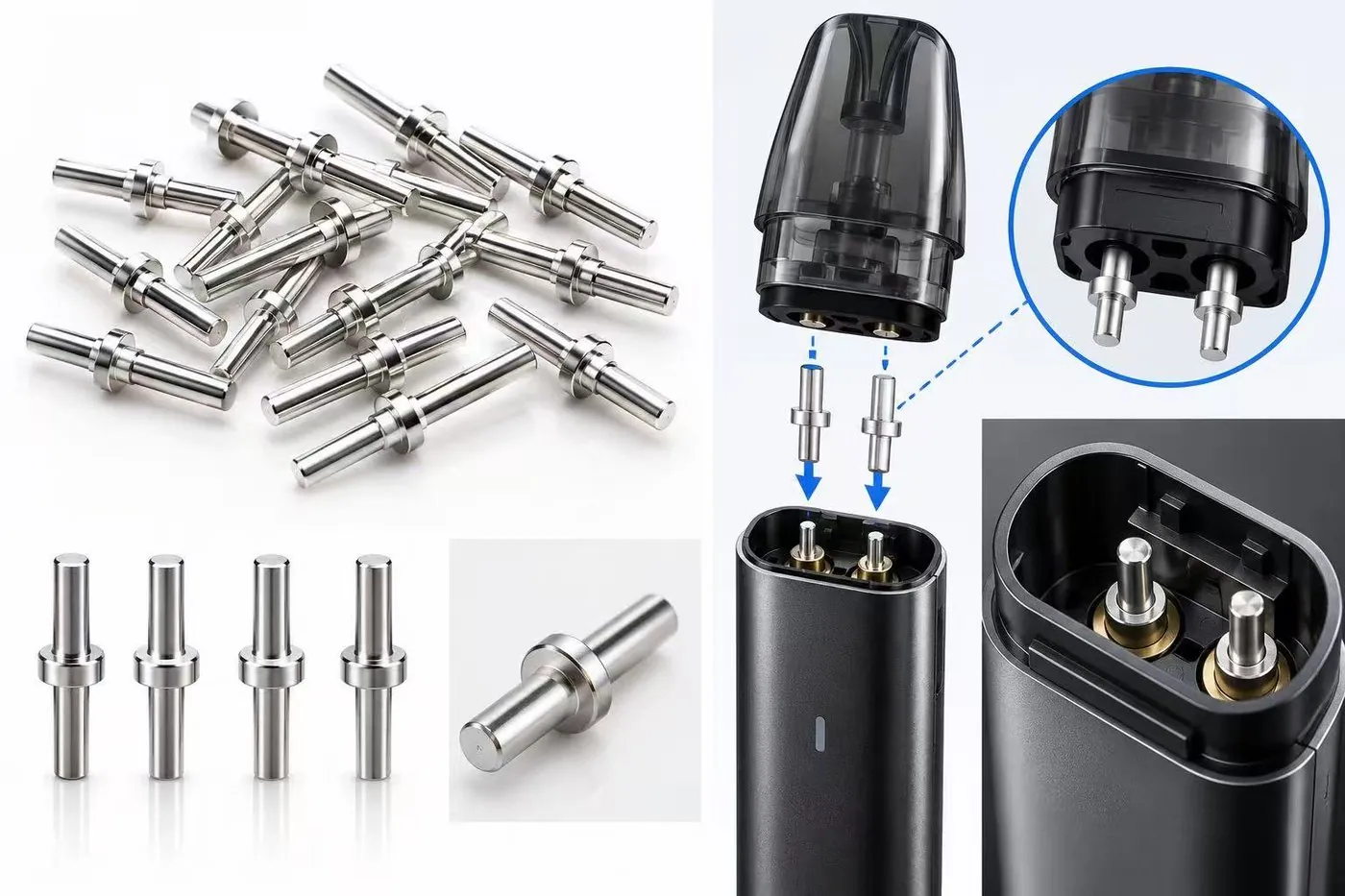
The part
Electrode pins carry current through a spring contact. The mating surface must be flat, polished and correctly plated — a rough tip becomes contact resistance, and contact resistance becomes heat.
Specification
These are the ranges we produce most often. If your drawing sits outside them, send it anyway — the answer will be honest, including when the answer is no.
| Material | Stainless steel · brass |
| Diameter | 0.8 – 3 mm |
| Length | 3 – 15 mm |
| Tip | Flat or radiused, polished Ra ≤ 0.4 µm |
| Plating | Gold flash or nickel under-layer |
| Process | Heading + turning + polishing + plating |
Values shown are typical for this part family, not a catalogue limit. Final specification is agreed against your drawing.
Why it is difficult
A part that looks correct can still fail in the field. These are the failure modes the process is designed around.
| Tip deformation | Bulk handling after polishing is where tips get damaged, not the machine. |
| Plating on a rough surface | Plating copies the substrate; polishing after plating removes the plating. |
| Burr at the shoulder | Creates a high point that changes the contact force. |
Inspection
2D projector at high magnification.
Visual under magnification against a comparator.
Tape and bend test on samples per lot.
Diameter and length, 100% screened on high volume.
Where it goes
Spring-loaded contacts in a sealed housing.
Low-current contacts where oxide film matters.
Small pins in dense arrays.
Feasibility, process route and an indicative price in 48 hours — including when the answer is that turning is the better route.
Send a drawing